
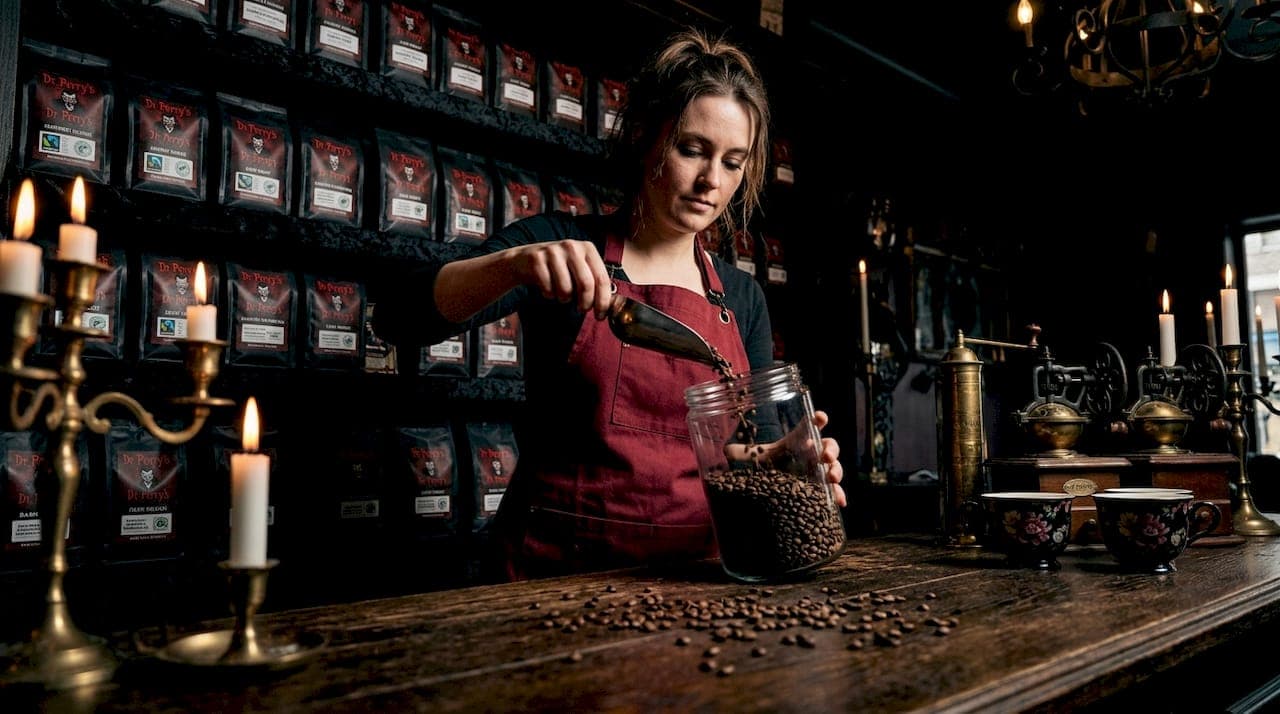
You want to do the right thing when you buy coffee. But the moment you stand in front of a shelf full of bags stamped with words like "sustainable," "ethical," and "responsibly grown," the good intention starts to blur. Learning to identify ethically sourced coffee beans is not about memorizing a checklist. It's about knowing what questions to ask, what labels actually mean, and what red flags tell you a brand is selling a story rather than a standard. This guide cuts through the noise and gives you a practical framework you can use every single time you buy.
Table of Contents
- Key Takeaways
- How to identify ethically sourced coffee beans: the foundations
- Steps to verify ethical sourcing claims
- Red flags to watch for on packaging and marketing
- How ethical sourcing connects to quality and impact
- My honest take on ethical coffee buying
- Where to find coffee you can actually trust
- FAQ
Key Takeaways
| Point | Details |
|---|---|
| Certifications are a starting point | Labels like Fair Trade and Rainforest Alliance set a floor, not a ceiling, for ethical sourcing. |
| Traceability beats buzzwords | Named farms, cooperatives, and GPS data are stronger signals than vague marketing language. |
| Price tells a story | Rock-bottom prices make it nearly impossible to pay farmers a living wage. |
| QR codes unlock sourcing data | Scan packaging codes to access harvest details, producer profiles, and origin information. |
| Ethical sourcing improves cup quality | Farmers who are paid fairly invest in better processing, which directly affects flavor. |
How to identify ethically sourced coffee beans: the foundations
Before you can evaluate a bag of coffee, you need to understand what ethical sourcing actually covers. It sits on three pillars: environmental responsibility, social fairness, and economic viability for farmers. A brand can check one box and ignore the others, so you need to look at all three.
Certifications and what they actually guarantee
Certifications are the most visible signal on any bag of coffee. Here is what the major ones mean in practice:
- Fair Trade Certified: Sets minimum price floors and social premiums paid to farmer cooperatives. It protects against the worst exploitation but does not guarantee premium quality or deep farm relationships.
- Rainforest Alliance: Focuses heavily on environmental and social standards. About 1.7 million tons of coffee are certified under Rainforest Alliance worldwide as of early 2026, which shows the scale of adoption but also means standards vary widely across that volume.
- USDA Organic: Verifies that no synthetic pesticides or fertilizers were used. It says nothing about farmer wages or working conditions.
- Bird Friendly (Smithsonian): The most rigorous environmental certification available. It requires shade-grown production and USDA Organic compliance, making it a strong dual signal for environmental care.
No single certification covers everything. The strongest ethical sourcing stories usually combine a certification with additional transparency about the farm itself.
Traceability and transparency: the real differentiators
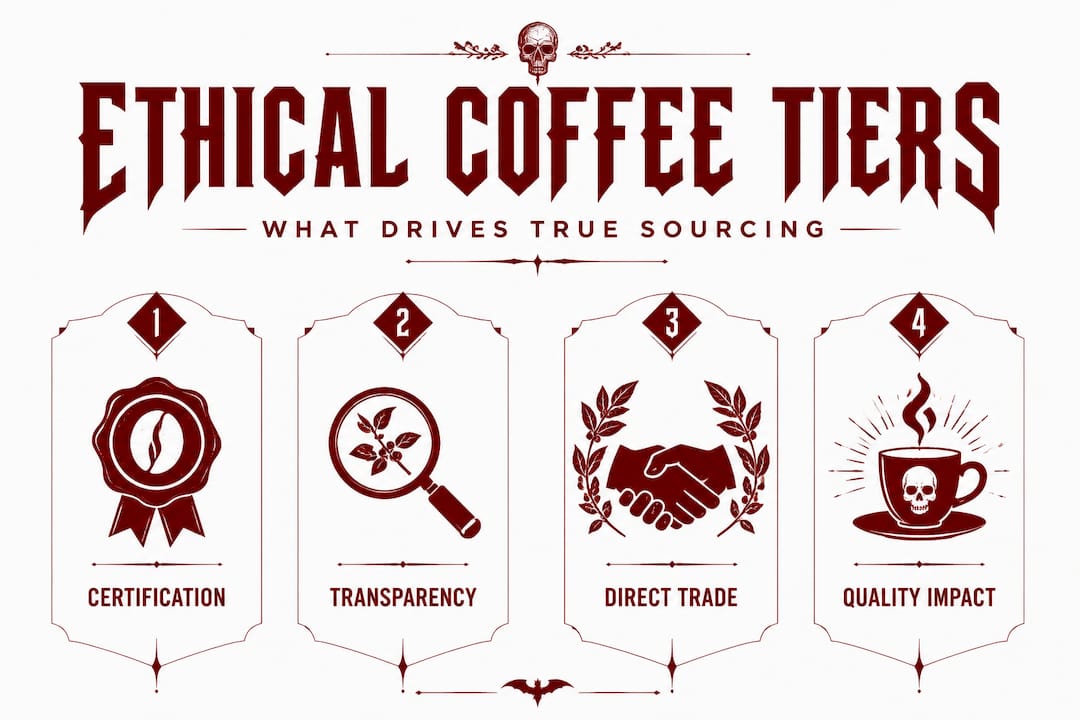
Farm-level traceability details like altitude, variety, and processing method function like ingredients on a label. They are the markers of an authentic sourcing story. When a roaster can tell you the name of the farm, the cooperative, the harvest year, and the processing method, that specificity is not accidental. It means someone actually visited, built a relationship, and paid attention.
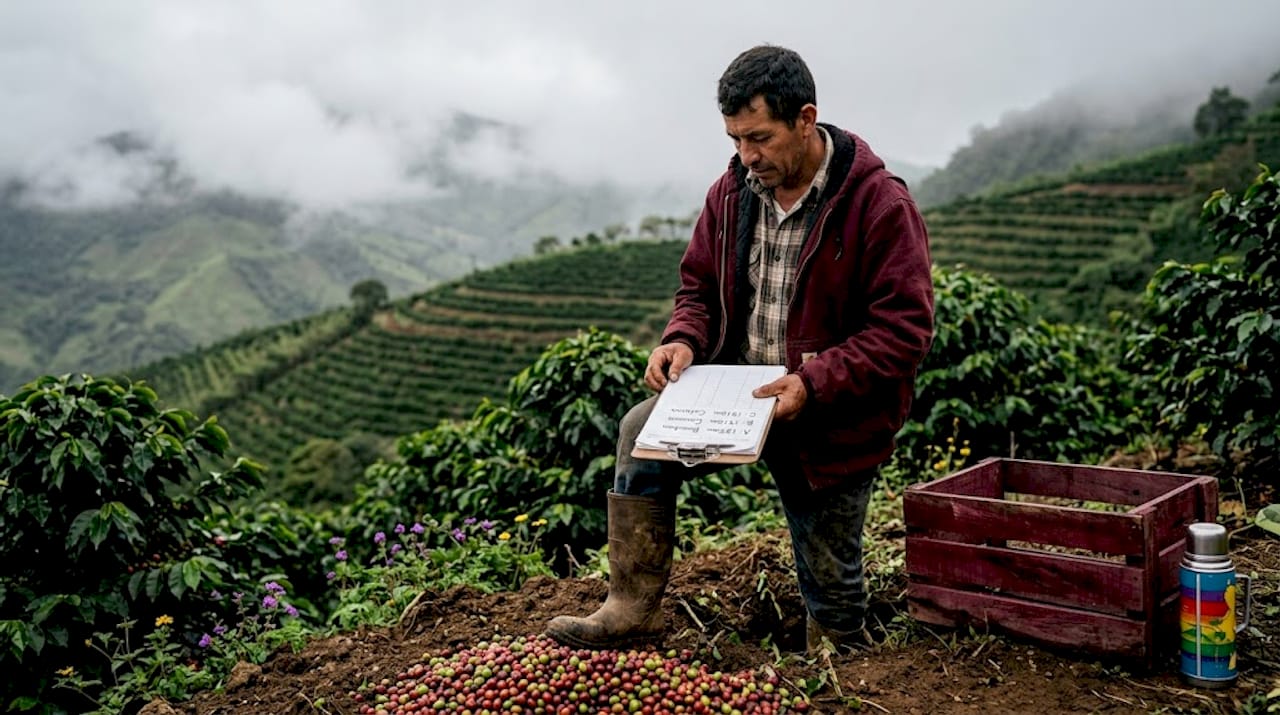
Transparency goes one step further. A transparent brand publishes its sourcing practices, shares what it pays farmers relative to market prices, and does not get defensive when you ask questions. That openness is a far stronger signal than any logo on a bag.
Direct trade and why it matters
Direct trade is not a certification. It is a practice. Roasters who buy direct trade typically visit farms personally, commit to purchasing before the harvest, and pay above Fair Trade minimums. Direct trade involves repeat buying, pre-harvest commitments, and farm-level investments that certifications alone cannot mandate. When a roaster mentions a multi-year relationship with a specific farm family, that is a meaningful signal worth weighing.
Pro Tip: Look for the words "single origin" paired with a specific farm or cooperative name, not just a country. "Single origin Ethiopia" is marketing. "Single origin Yirgacheffe, Kochere Cooperative, washed process" is traceability.
Steps to verify ethical sourcing claims
Once you understand the foundations, here is how to apply them when you are actually buying coffee.
-
Check for certifications and cross-reference them. Look for Fair Trade, Rainforest Alliance, USDA Organic, or Bird Friendly logos. If you see one, visit the certifying body's website and verify the roaster is listed. Logos can be misused, and a 30-second search confirms legitimacy.
-
Read the origin information carefully. A country name alone is not traceability. Look for a region, farm name, or cooperative name. If the bag says "Colombia blend" with no further detail, that is a sourcing story with no story.
-
Scan any QR codes on the packaging. QR codes on packaging can give you access to detailed origin, harvest, and producer information, creating what amounts to a direct connection between you and the farm. Brands that invest in this technology are signaling that they have nothing to hide.
-
Research the roaster's sourcing page. Any brand serious about sustainable coffee sourcing will have a sourcing or impact page on its website. Look for specifics: named farms, photos of producers, price premiums paid, and visit frequency. Vague language like "we work with farmers who share our values" without any specifics is a warning sign.
-
Look for evidence of repeat purchasing. One-time spot buying does not build farmer livelihoods. Roasters who return to the same farms year after year, and say so publicly, are practicing the kind of sustainable coffee sourcing that actually changes outcomes for producers.
-
Ask the brand directly. Send an email or a social media message asking where a specific coffee comes from and what the roaster paid relative to Fair Trade minimums. A brand committed to ethical sourcing will answer that question without hesitation. One that deflects or goes quiet is telling you something important.
Pro Tip: 11 major companies adopted standardized reporting metrics to track sustainable coffee purchases in 2024 through the Global Coffee Platform. If a brand you're evaluating participates in programs like this, that's a credible third-party accountability signal worth noting.
Red flags to watch for on packaging and marketing
Knowing what to look for is only half the work. Knowing what to avoid is equally important.
-
Vague language without proof. "Sustainably sourced" without third-party verification is not a claim you can hold anyone to. Ethical sourcing is not a legally defined term, which means any brand can use it freely. Specifics matter. Proof matters.
-
No producer visibility. Lack of farm-level traceability almost always signals that ethical claims are driven by marketing rather than practice. If you cannot find a single farmer's name, cooperative, or washing station anywhere on the bag or website, treat the claims with skepticism.
-
Prices that do not add up. Rock-bottom prices make it implausible to pay farmers a living wage. If a bag of "ethically sourced" coffee costs less than commodity-grade coffee at a grocery store, the math does not work. Ethical sourcing costs more at origin, and that cost has to appear somewhere in the price.
-
Unverifiable or invented certifications. Some brands create their own "ethical sourcing" badges with no third-party oversight. If you cannot find the certifying organization with a quick search, the badge means nothing.
"The most honest thing a coffee brand can do is show you exactly where your money goes. If they won't, ask yourself why."
Watch for brands that become defensive or evasive when asked direct questions about sourcing. Transparency is not a bonus feature for ethical brands. It is the baseline.
How ethical sourcing connects to quality and impact
Here is something the marketing rarely tells you: ethical sourcing and great coffee are not separate goals. They are the same goal.
A coffee's flavor and quality are closely tied to the financial stability and ethical sourcing practices that allow farmers to invest in better pickers, more careful processing, and overall farm care. When a farmer earns enough to hire skilled cherry pickers who select only ripe fruit, the result is a cleaner, more complex cup. When they can afford proper fermentation tanks and drying beds, the processing quality goes up. The economics flow directly into the flavor.
Environmental practices that improve the cup
Shade-grown coffee supports wildlife habitats, stabilizes ecosystems, and produces slower-ripening cherries with more developed sugars and acids. That slower ripening is not just good for birds. It is good for your cup. The same practices that protect biodiversity also produce more nuanced, higher-quality coffee.
Over 70 coffee farms in Honduras have already received Rainforest Alliance Regenerative Agriculture certification as of 2026, showing that the industry is moving beyond basic compliance toward practices that actively restore ecosystems. Regenerative agriculture improves soil health, reduces water use, and builds long-term farm resilience.
The social and economic ripple effect
| Ethical practice | Farmer impact | Consumer benefit |
|---|---|---|
| Fair price premiums | Stable income, reduced debt | Consistent supply, better quality |
| Repeat purchasing | Farm investment, workforce retention | Relationship coffees with known profiles |
| Community investment | Schools, healthcare, infrastructure | Long-term origin sustainability |
| Shade growing | Biodiversity, lower input costs | Richer flavor, environmental credibility |
The future of sustainable coffee is shifting toward long-term resilience and climate adaptation rather than minimal compliance. The farms that survive the next 20 years of climate disruption will be the ones that received fair prices, built soil health, and maintained diverse ecosystems. Your purchasing choices today are part of that equation.
Pro Tip: When recognizing quality coffee beans at the bag level, treat the processing method as a flavor indicator. Natural-processed coffees tend toward fruity and wine-like notes. Washed coffees are cleaner and brighter. Honey-processed fall in between. A brand that tells you the processing method is giving you useful information on two levels at once.
My honest take on ethical coffee buying
I've spent years paying attention to how coffee brands talk about sourcing, and the pattern I've noticed is this: the brands with the most to say about ethics are often the ones doing the least. The ones actually doing the work tend to let the details speak for themselves. A named farm, a published price premium, a photo of the farmer. That's it.
What I've learned is that certifications matter, but they are a floor, not a ceiling. I've had certified Fair Trade coffees that tasted like cardboard and direct-trade coffees with no logo on the bag that were extraordinary. The certification tells you a minimum standard was met. The traceability tells you who grew it, how, and whether anyone cared enough to go back.
The question I always ask when evaluating a brand is simple: can I find the name of the person who grew this coffee? If yes, I'm interested. If the answer is a country and a vibe, I move on.
I also think consumers underestimate how much power they have here. When you ask a brand a direct question about sourcing and they answer it specifically, you reward that behavior by buying. When you ask and they dodge, you walk away. That feedback loop, repeated across thousands of customers, is what actually changes how the industry operates.
Start small. Read one label more carefully than you did last week. Ask one question you haven't asked before. That's how this gets better.
— Chris
Where to find coffee you can actually trust
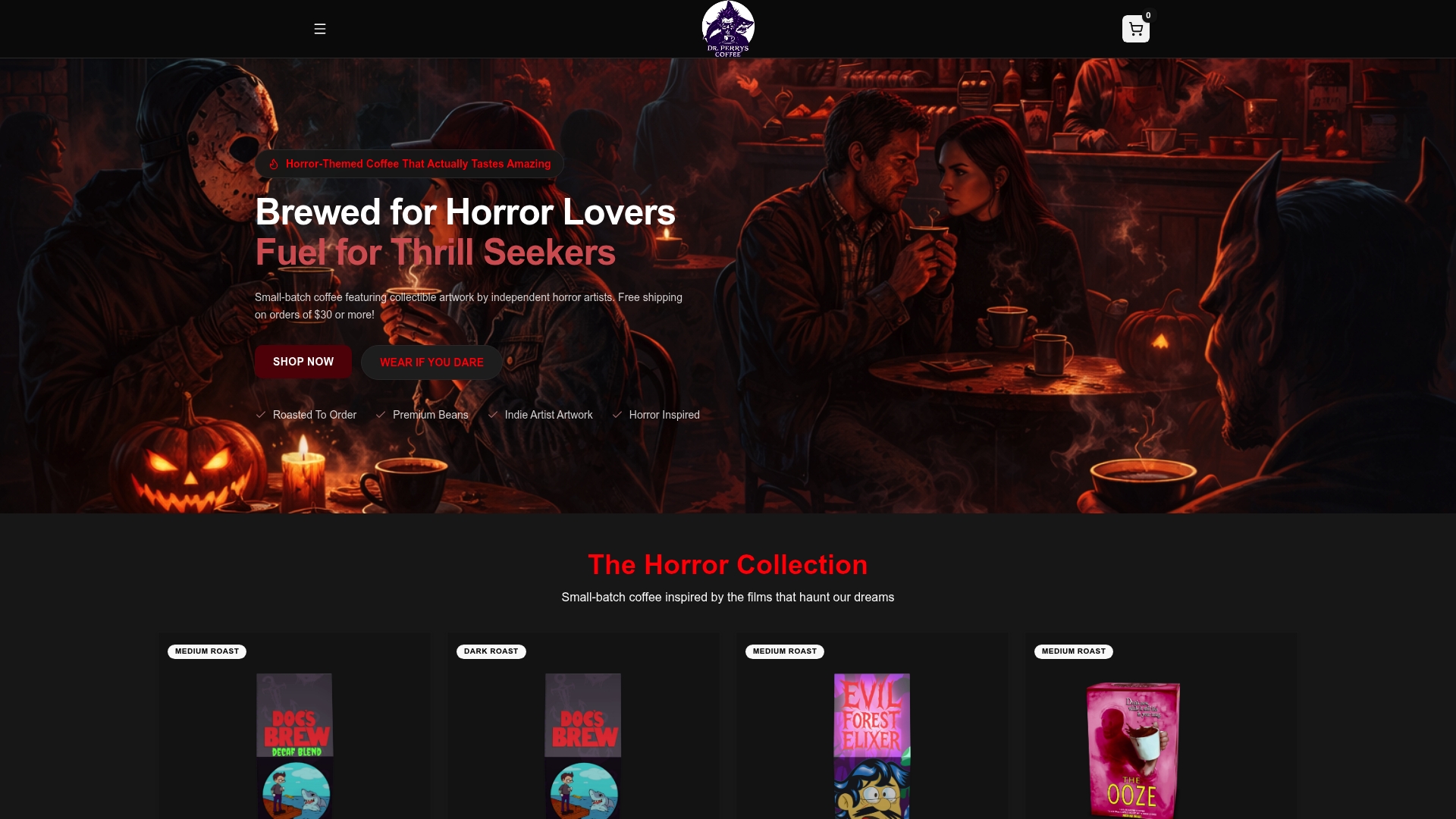
At Drperryscoffee, ethical sourcing is not a marketing line. Every small-batch roast is built around transparency, traceability, and a genuine relationship with the beans and the people who grew them. The brand pairs that commitment with collectible horror artwork from independent artists, recyclable packaging, and carbon-neutral shipping because doing things right should extend across the whole experience. If you have been looking for coffee that meets the criteria in this guide and also happens to fuel your love of horror culture, explore the full selection and see exactly where each roast comes from. No vague claims. No invented badges. Just coffee worth drinking and a story worth knowing.
FAQ
What certifications should I look for on ethical coffee?
Look for Fair Trade, Rainforest Alliance, USDA Organic, and Bird Friendly certifications. Each covers different aspects of ethical sourcing, so multiple certifications together provide stronger assurance than any single label alone.
Is "sustainably sourced" on a coffee bag meaningful?
Not on its own. "Sustainably sourced" is not a legally defined term, and without third-party verification or specific traceability details, it functions as marketing language rather than a verifiable claim.
How does price indicate whether coffee is ethically sourced?
Very low prices make it mathematically difficult to pay farmers a living wage after accounting for production, export, roasting, and retail costs. If a bag is priced below commodity-grade coffee, ethical sourcing claims deserve extra scrutiny.
What is direct trade coffee and why does it matter?
Direct trade means a roaster buys directly from a farm, typically with repeat purchasing, pre-harvest commitments, and above-market prices. It often results in stronger farmer relationships and higher quality than certification programs alone can guarantee.
Can I verify a coffee's origin before buying?
Yes. Many brands now include QR codes on packaging that link to harvest data, producer profiles, and origin details. You can also check the roaster's sourcing page or contact them directly to ask about specific farms or cooperatives.