
Most coffee drinkers assume the roasting process is roughly the same everywhere. You buy beans, you roast them, you brew. The reality is that why micro roasters differ from commercial producers goes far deeper than bag size or price point. The gap between these two worlds touches everything: how beans are sourced, how heat is applied, how long coffee sits before it reaches your cup, and what the roaster actually values when they flip the switch. If you care about what's in your mug, understanding these distinctions changes how you shop forever.
Table of Contents
- Key takeaways
- Why micro roasters differ from commercial: the batch size factor
- Bean quality and sourcing: specialty vs. commodity
- Freshness, roasting philosophy, and flavor
- Craft focus vs. scale-driven systems
- Practical guide to choosing the right coffee for you
- My take on the micro roaster experience
- Discover the micro roaster difference with Drperryscoffee
- FAQ
Key takeaways
| Point | Details |
|---|---|
| Batch size drives flavor | Micro roasters process 5 to 25 kg per batch, enabling precise heat control and nuanced flavor development. |
| Bean quality is non-negotiable | Micro roasters use specialty-grade beans scoring 80+ on the SCA scale, while commercial brands rely on commodity blends. |
| Freshness is a real advantage | Micro-roasted coffee peaks between 7 and 30 days post-roast; commercial coffee often ages for months in supply chains. |
| Philosophy shapes the cup | Craft roasting prioritizes human intuition and real-time adjustment; commercial roasting prioritizes automation and uniformity. |
| Neither is universally better | Your preference for complexity versus convenience should guide your choice, not brand loyalty. |
Why micro roasters differ from commercial: the batch size factor
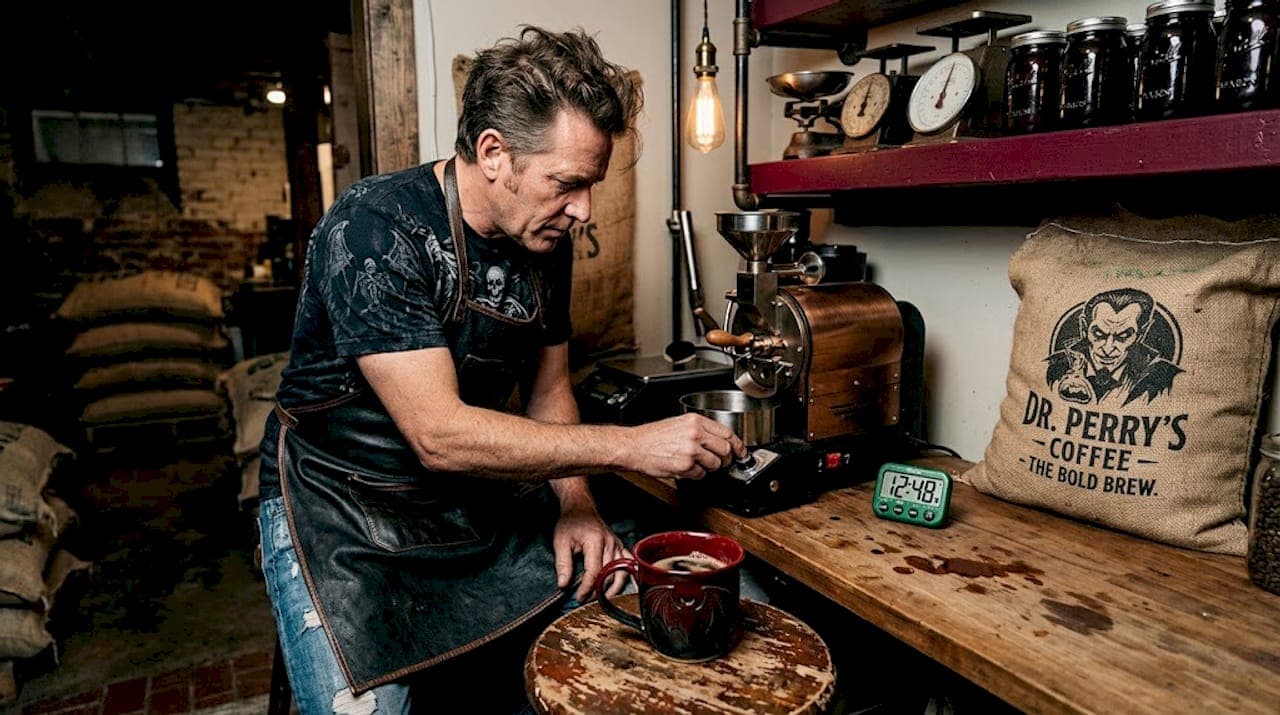
The single most consequential difference between micro and commercial roasting is scale. Micro-roasters process 5 to 25 kg per batch, while commercial operations roast hundreds of kilograms at a time. That gap is not just logistical. It fundamentally changes what the roaster can do with heat.
When you load a small drum with 10 kilograms of green coffee, the beans respond almost immediately to temperature changes. A skilled roaster can nudge the heat up or back off within seconds and watch the roast curve shift in real time. This is what thermal responsiveness means in practice: the roaster stays in control of the process rather than managing momentum.
Commercial batches work differently. Load 300 kilograms into an industrial drum and you are dealing with thermal inertia on a massive scale. The heat stored in that mass keeps driving the roast forward even after you reduce the burner. Roasters at that scale build rigid, repeatable profiles designed to account for that momentum. The system works, but flexibility disappears.
| Factor | Micro roaster | Commercial roaster |
|---|---|---|
| Batch size | 5 to 25 kg | 100+ kg |
| Heat control | Real-time adjustment | Automated, fixed profiles |
| Flavor development | Nuanced, expressive | Consistent, predictable |
| Roast frequency | Small runs, often to order | Continuous large production |
Pro Tip: When buying from a micro roaster, ask for the roast date, not just the "best by" date. A roast date tells you exactly how fresh your coffee is.
Bean quality and sourcing: specialty vs. commodity
The coffee in your supermarket bag and the coffee from a micro roaster often start their lives on completely different farms. Specialty-grade beans score 80 or above on the Specialty Coffee Association's 100-point scale. Commercial coffee typically uses commodity-grade beans, which are bought and sold by volume with price as the primary driver.
Micro roasters can access what the industry calls microlots. These are small, farm-specific harvests, sometimes as few as 50 bags from a single producer, that carry distinct regional and varietal characteristics. Small batch roasters source unique microlots and direct trade coffees that commercial operations simply cannot replicate at their scale.
Here is what that sourcing difference looks like in practice:
- A micro roaster might offer a washed Ethiopian Yirgacheffe from a single cooperative, traceable to a specific harvest season, with tasting notes of jasmine and bergamot.
- A commercial brand sources from multiple origins and blends them to hit a flavor target that stays consistent year-round, regardless of harvest variation.
- Micro roasters can adjust their offerings seasonally, following the global harvest calendar across Ethiopia, Colombia, Kenya, and Guatemala.
- Direct trade relationships mean micro roasters often pay above fair trade minimums, which improves farmer livelihoods and incentivizes higher quality at the farm level.
- Commercial buyers prioritize contract pricing and volume guarantees, which structurally limits how much they can pay per pound.
The traceability you get from a micro roaster is not just a marketing story. It reflects a genuine supply chain difference that starts before the beans ever touch a roaster drum.
Freshness, roasting philosophy, and flavor
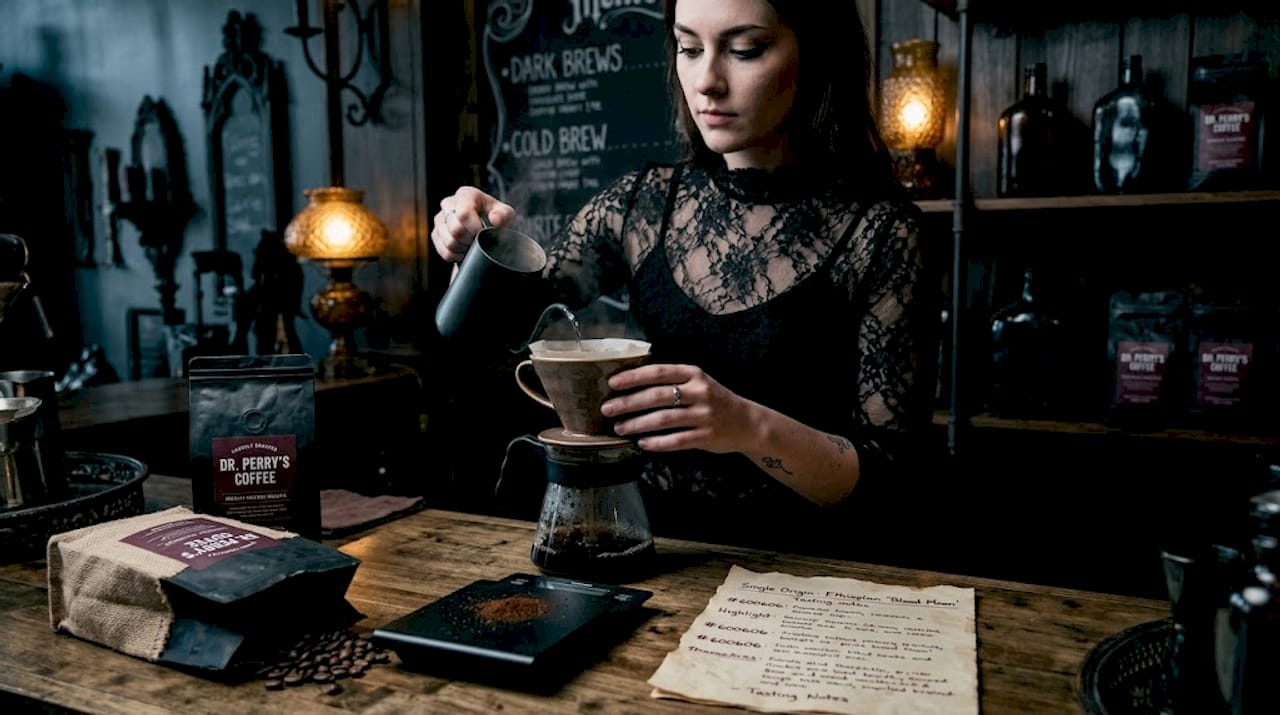
Here is something most coffee drinkers have never considered: the coffee you pull from a grocery store shelf may have been roasted four to six months ago. Micro-roasters roast to order, meaning your coffee is typically consumed within 7 to 30 days of leaving the drum. That window is where coffee is at its most expressive.
The freshness advantage is perceivable in both aroma and flavor. Freshly roasted coffee releases carbon dioxide through a process called degassing, and that CO2 carries volatile aromatic compounds that define the cup. Once those compounds dissipate, the coffee tastes flat regardless of how good the beans were.
Commercial roasters solve the freshness problem through roast level and packaging, not timing. Darker roasts mask bean defects and extend shelf life because the intense roasting process reduces the complexity that would otherwise degrade. It is a practical solution for a supply chain that spans warehouses, distribution centers, and retail shelves.
Micro roasters take the opposite approach:
- Lighter roast levels preserve the origin characteristics of the bean, the terroir of the farm, the processing method, and the varietal genetics.
- Roasting to order means smaller production runs and more frequent roasting sessions, which requires more labor but delivers a fundamentally fresher product.
- The flavor profiles from micro roasters tend toward brightness, fruit, and floral notes rather than the chocolate and smoke that dominate commercial blends.
- Seasonal offerings let micro roasters chase the best expression of each origin rather than locking into a year-round profile.
Pro Tip: If your micro roaster's coffee tastes sour or underdeveloped, it may need more time to degas. Let it rest 5 to 10 days after the roast date before brewing for the best results.
Craft focus vs. scale-driven systems
The operational philosophies behind micro and commercial roasting produce genuinely different products, and understanding this helps you set realistic expectations for both.
Micro roasting depends on roaster expertise and intuition, which creates both the ceiling and the floor of the experience. On a great day, with an experienced roaster reading the drum perfectly, a small-batch coffee can be transcendent. On a bad day, with humidity swings or a distracted roaster, the same beans can produce an inconsistent result. That fragility is real and worth acknowledging.
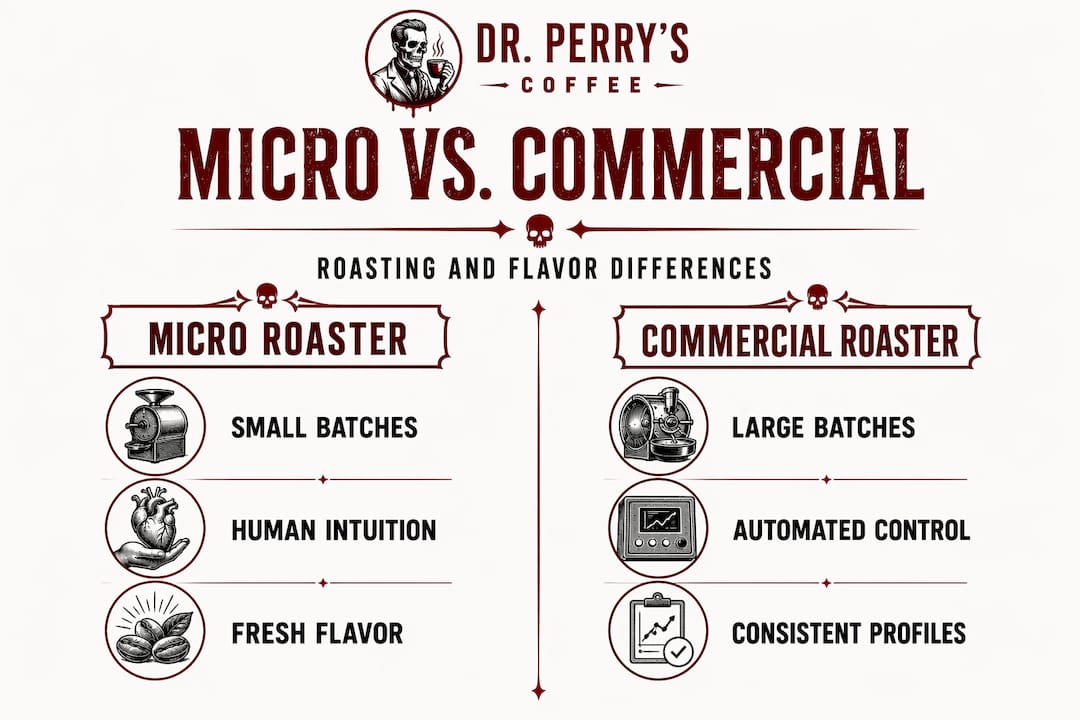
Commercial roasting eliminates most of that variability through documented, automated profiles. Commercial roasters rely on standardized systems to produce consistent outcomes at scale. The coffee you buy from a major brand tastes the same in January as it does in August, and that consistency is genuinely valuable for many consumers.
| Philosophy | Micro roaster | Commercial roaster |
|---|---|---|
| Decision-making | Human intuition, real-time | Automated, pre-set profiles |
| Output consistency | Variable, craft-dependent | High, system-dependent |
| Flavor range | Wide, origin-expressive | Narrow, blend-stabilized |
| Scalability | Limited | Designed for volume |
| Consumer experience | Discovery-oriented | Reliability-oriented |
The specialty coffee market is evolving as more small roasters adopt technology to balance efficiency with origin-specific flavor. That means the line between craft and scale is blurring at the edges, but the philosophical core of each approach remains distinct.
Practical guide to choosing the right coffee for you
Understanding artisan vs commercial roasting is useful, but the real question is what it means for your daily cup. Neither approach is objectively superior. They serve different needs.
- Prioritize freshness and flavor complexity. If you want to taste the difference between a Kenyan AA and a Colombian Huila, choose a micro roaster. The flavor range available through small-batch sourcing is simply wider.
- Consider your brewing setup. Lighter, more expressive micro-roasted coffees perform beautifully in pour-over and AeroPress. If you primarily drink espresso with milk, a well-blended commercial roast may actually suit your palate better.
- Factor in price honestly. Micro roasting benefits include superior sourcing and freshness, but those come at a cost. Expect to pay $18 to $25 per 12-ounce bag from quality micro roasters versus $10 to $14 for commercial equivalents.
- Support what matters to you. Buying from micro roasters supports small businesses, direct trade farmers, and often more sustainable practices. If that aligns with your values, the price premium carries additional meaning.
- Read the bag. A quality micro roaster will list the origin, farm or cooperative, processing method, and roast date. If a bag only says "dark roast blend," you are looking at a commercial product regardless of how artisanal the packaging looks.
My take on the micro roaster experience
I have spent years tasting coffees from both worlds, and what I keep coming back to is this: micro roasters offer something commercial coffee structurally cannot, which is surprise. The first time I brewed a natural-processed Ethiopian from a small roaster and got a cup that tasted like blueberry jam and dark chocolate with zero additives, it genuinely changed how I thought about the beverage.
That said, I have also watched people romanticize micro roasting past the point of honesty. The craft model is fragile. I have had small-batch coffees that were underdeveloped, inconsistent, or just poorly roasted by someone who learned on YouTube. The label "micro roaster" is not a quality guarantee. The roaster's skill and sourcing relationships are what matter.
Commercial coffee gets unfairly dismissed by enthusiasts, and I think that is a mistake. Skilled commercial roasters produce consistent quality through blending and automation that takes real expertise to execute. If you need a reliable, affordable daily driver, there is nothing wrong with that.
What I encourage is curiosity rather than loyalty. Try a micro roaster's single-origin offering alongside your usual commercial bag. Brew them the same way. Pay attention to what you taste. That comparison will teach you more about coffee roasting techniques comparison than any article can.
— Chris
Discover the micro roaster difference with Drperryscoffee
If this breakdown of micro roaster advantages has you ready to taste the difference firsthand, Drperryscoffee is built for exactly that kind of coffee enthusiast. Every roast is a small-batch, specialty-grade offering paired with original artwork from independent horror artists, creating a ritual that goes well beyond the morning brew.
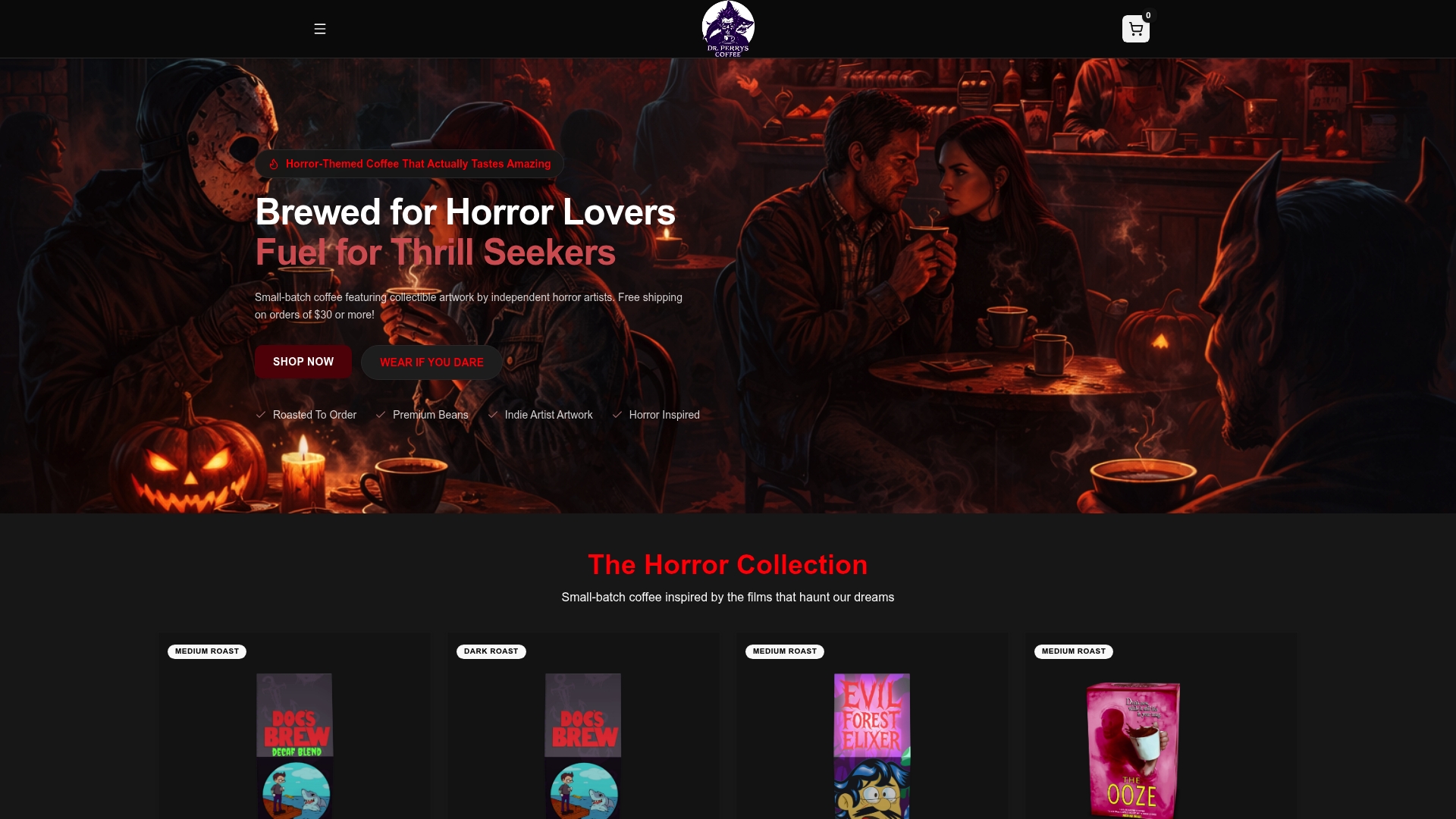
Drperryscoffee sources with intention, ships with carbon-neutral practices, and uses recyclable packaging because the values behind the cup matter as much as what's in it. If you are ready to experience what freshness, traceability, and genuine craft roasting taste like, explore the full collection and find a roast that matches your palate and your passion.
FAQ
What makes micro roasters different from commercial brands?
Micro roasters process small batches of 5 to 25 kg using specialty-grade beans, roasting to order for peak freshness. Commercial brands prioritize volume, consistency, and shelf life through automated systems and commodity-grade blends.
Are micro-roasted coffees always fresher?
Yes, in most cases. Micro roasters typically ship coffee within days of roasting, with a freshness window of 7 to 30 days post-roast. Commercial coffee often sits in supply chains for months before reaching the shelf.
Why do micro roasters use lighter roasts?
Lighter roasts preserve the origin characteristics of high-quality specialty beans, including floral, fruit, and terroir-driven flavors. Commercial roasters use darker roasts to mask defects in lower-grade beans and extend shelf life.
Is micro-roasted coffee worth the higher price?
For flavor complexity, traceability, and freshness, most coffee enthusiasts find the price premium justified. The extra cost reflects better sourcing, smaller production runs, and more labor-intensive roasting practices.
How do I know if a coffee is truly small-batch?
Look for a roast date, specific origin information such as farm or cooperative name, and a processing method on the bag. Genuine micro roasters provide this detail because traceability is central to their sourcing philosophy.